Scripture
Daniel's 70 Weeks Prophecy
Daniel 9 Prophecy
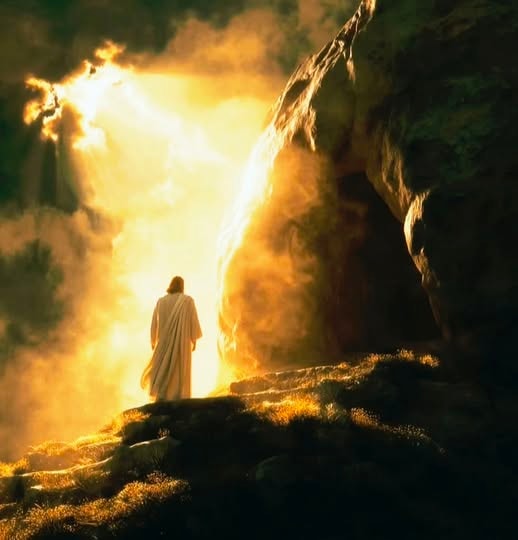
THE COMING KING
Many scholars consider the Daniel chapter 9 prophecy “as one of the most difficult and controversial in the Bible.” (1)
Daniel 9 begins with verses 1–3 and he is reading Jeremiah’s prophecies in 25:11–12 and 29:10. 29:10 reads Thus says the LORD “When the seventy years have been completed for Babylon, I will visit you and fulfill My good word to you, to bring you back to this place (Jerusalem).” Daniel realizes that the 70 years is almost up and he prays to the LORD GOD with fasting, sackcloth and ashes.
DANIEL’S PRAYER
“The structure of the prayer is similar to prayers in Jeremiah, Ezra, Nehemiah and to a lesser extent Ezekiel.” Grok A.I.
1. Adoration and Invocation: “Daniel addresses The Great and Awesome GOD who keeps His covenant and steadfast love with those who love Him.” enduringword.org
2. Confession of Corporate Sin: “Daniel identifies with Israel’s sin, guilt and rebellion against God’s law and prophets and states the judgment of God are just.” bible.org
3. Daniel recalls the Past: “When God brought Israel out of Egypt with a mighty hand.”
4. Petition for Mercy and Restoration: “Daniel asks God to turn away His anger from Jerusalem, (Your City) (Your Holy Hill) because of God’s great compassion and for the sake of His own name, … Hear O–LORD, Forgive O–LORD and act, Delay not! …” biblegateway.org
THE PROPHECY

While Daniel was still praying God swiftly sends the angel Gabriel with the answer to his prayer. The answer was yes, God would restore Israel but, in His time.
Daniel 9:24 — Seventy weeks are determined, for your people and for your holy city.
- 1. To finish the transgression.
- 2. To make an end of sin.
- 3. To make atonement for iniquity.
- 4. To bring in everlasting righteousness.
- 5. To seal up the vision and the prophecy.
- 6. And to anoint the most holy place.
Daniel 9:25 — Know therefore and understand, that from the issuing of the decree to restore and rebuild Jerusalem, until Messiah the Prince, there will be seven weeks and sixty-two weeks; the street will be built again and the wall, even in troublesome times.
Daniel 9:26 — Then after the sixty-two weeks the Messiah will be cut off, but not for Himself; and the people of the prince who is to come shall destroy the city and the sanctuary. The end of it will be with a flood, and until the end of the war, desolations are determined.
Daniel 9:27 — Then he shall confirm a covenant with many for one week; but in the middle of the week, he shall bring an end to the sacrifice and offering. And on the wing of abominations shall be the one who makes desolate.
“This startlingly accurate prophecy follows the sweep of gentile power to the end times and the antichrist before Christ returns.” John MacArthur 2
WHAT SCHOLARS SAY
There are four major theories by scholars, and the math fails on all of them. Grok A.I.
The Jewish, Traditional Continuous Messianic and Dispensational/Futuristic interpretations all fall short. Even the Secular Historical Critical Consensus that the book of Daniel was written in the time of the Maccabee’s fails. Grok A.I.
You might think that an imposter Daniel writing in the time of the Maccabee’s would get the math right. These theories are readily available online. However, the 360-day prophetic calendar does work.
“Mesopotamian scribes sometime reckoned an ideal year of 12 months of 30 days for administration and astronomy. Some biblical passages flood narratives use the same round number for months. The flood narrative counts 150 days as 5 months, (Genesis 7:11, 24, and 8:24) which implies 30 day months. A time, times and half a time in Daniel 7:25, and 12:7 is matched in Revelation with 42 months. Also 1,260 days in Revelation 12:6 and 13:5, divided by 3.5 and you get 360 days. From those inferences, later interpreters inferred a prophetic year of 360 days. Sir Robert Anderson then applied the 360 prophetic years to the 70-weeks prophecy in his book, The Coming Prince along with those writers who followed him.” Grok A.I.
EZRA AND NEHEMIAH
The Persian king Artaxerxes I, wrote a letter to Ezra which is recorded in Ezra 7:12–26, probably in 458/457 and refers to the restoration of the temple in Jerusalem. Sometime between the books of Ezra and Nehemiah, scholars believe the king issued a stop work order to Ezra’s activities around 446 B.C. I think the stop work decree happened earlier around 452 and therefore was not recorded in the Bible. That better fits the political situation in the Levant which I will show.
It is my view that Artaxerxes I issued a command to restart the rebuilding of Jerusalem along with the walls of the city which also falls between the books of Ezra and Nehemiah. If a decree happened in 451 B.C., the Dispensational/Futuristic interpretation becomes viable.
In 451 B.C. Daniel’s prophetic clock of 69 weeks starts moving through Nehemiah’s rebuilding of the walls of Jerusalem and all the way to 33 A.D. when “the Messiah is cut off.” This leaves the last 70th week sometime in the future. As MacArthur states “the 7 weeks concern the antichrist in the end times when he makes a covenant with Israel for 3 and 1/2 years.” 3
With this theory the math works perfectly and helps explain Jesus’s warnings in Matthew 24 and the other gospels about an “abomination of desolation” of a temple sometime in the future. This third temple the Jewish people are longing to build to this day.
451 B.C.
In 451 B.C. Artaxerxes I had good reasons to issue his first decree to fortify Jerusalem. “Early in his reign a revolt broke out in Egypt led by Inaros a Dynast from the Western Delta. The revolt lasted 10 years from 464–454 B.C. The narrative for this rebellion is found in Diodorus, Thucydides, and Ctesias’s. Inaros seized territory in northern Egypt and with the help of 200 ships from Athens defeated a Persian army there. A Persian noble named Megbyzus gathered an army in Cilicia and Phoenicia, marched to Egypt and finally defeated the rebels. Ctesias was writing a few decades after these events and states that Megbyzus had a falling out with Artaxerxes and made war against his king. Somehow, they eventually worked out a peace between them. It is difficult what to make of this report …but a revolt by a Persian noble would have posed a real threat to Achaemenid control.” 3
“Athenian army landed on Cyprus during this period in 451/449 B.C. The invasion eventually failed but a Greek fleet defeated a Persian naval force offshore and drove it back to Phoenicia. Artaxerxes needed to keep the Levant coastal road open and that road ran near Jerusalem. This road mattered and was of ‘great concern’ to the Persians.” Grok A.I.
“A theory that Artaxerxes issued a first decree in 451 B.C., is possible and fits the chronology of the 69 weeks of Daniel chapter 9 exactly, but it is an argument from silence.” Grok A.I.
However, Grok A.I. also admits “That most of the Persian diplomatic archives were lost in the fire of Persepolis in the time of Alexander the Great.”
NEHEMIAH
In the year 445 B.C., Nehemiah held an important position that gave him access to the Persian king. “In that same year he was dispatched to deal with a number of serious problems in Jerusalem and surrounding areas. The cause of the problems is not known, although some of them may be related to Ezra’s mission.” 4
Josephus records what some of those critical problems were. “While Nehemiah was in Suza, he heard a report that the city was in bad shape and its walls had been thrown down. In the daytime neighboring nations overran the country taking captives and leaving many dead men on the roads.” 5 I believe this is Daniel’s reference that ‘the wall would be raised in troublesome times.’ Nehemiah seemed truly shocked and surprised the earlier decree to rebuild the walls in 451 B.C. was being ignored.
Josephus continued “That after the evening supper had been served, the king was merrier than usual, Nehemiah took this occasion to give a report to the king about the trouble in Jerusalem.” 6 At first the king seemed unconcerned but, in the morning after the king sobered up, he realized the gravity of the situation.
“Artaxerxes called Nehemiah in to the throne room the next day and issued a new decree, this time backed by force. Armed with dispatches, letters and cavalry Nehemiah moved with haste to Jerusalem and rebuilt the walls of Jerusalem in record time.” 7 Nehemiah states “the hand of God was on me” and he also built a fortress (Nehemiah 7:2), which could only have been authorized by the king. It is doubtful that Nehemiah knew he was fulfilling the first part of Daniel’s prophecy but there were spiritual forces that knew the prophetic clock was moving, and they were determined to stop him.
THE PROPHETIC TIMELINE
The first 7 weeks move with the completion of Nehemiah's work and advances as a unit with 62 weeks until “the Messiah is cut off,” in 33 A.D. “The people of the prince who is to come,” is Titus and his legions who destroyed the city of Jerusalem and the sanctuary, scattering the Jewish people. The last 7 weeks as MacArthur stated is the last 7 years of human history where God concludes Jewish and Gentile history. The Jewish people will build a third temple sometime in the end times, which the antichrist will desecrate in the sanctuary in the middle of the remaining 7 years. MacArthur states “clearly the first advent of Messiah did not bring in everlasting righteousness, Last three sections of the prophecy will be fulfilled with return of Christ.” 8 The angel tells Daniel to “seal up the vision until the time of the end,” when the prophecy will be understood. The “anoint the most holy” is thought by scholars to refer to the Messiah, the temple or both.
Grok A.I.
REFERENCES
- 1 Tremper Longman III and David E. Garland, The Expositor’s Bible Commentary, Daniel and Malachi, p. 168, “The 70 Weeks of Daniel is the dismal swamp of O.T. criticism.”
- 2 John MacArthur, The MacArthur Study Bible, p. 1244.
- 3a John MacArthur, The MacArthur Study Bible, p. 1244; 3b Matt Waters, Ancient Persia, pp. 159–160.
- 4 Matt Waters, Ancient Persia, p. 162.
- 5 6 7 The New Complete Works of Josephus, Translated by William Whiston, Commentary by Paul L. Maier, Jewish Antiquities, Book II, Chapter 5, pp. 371–372.
- 8 John MacArthur, The MacArthur Study Bible, p. 1244.